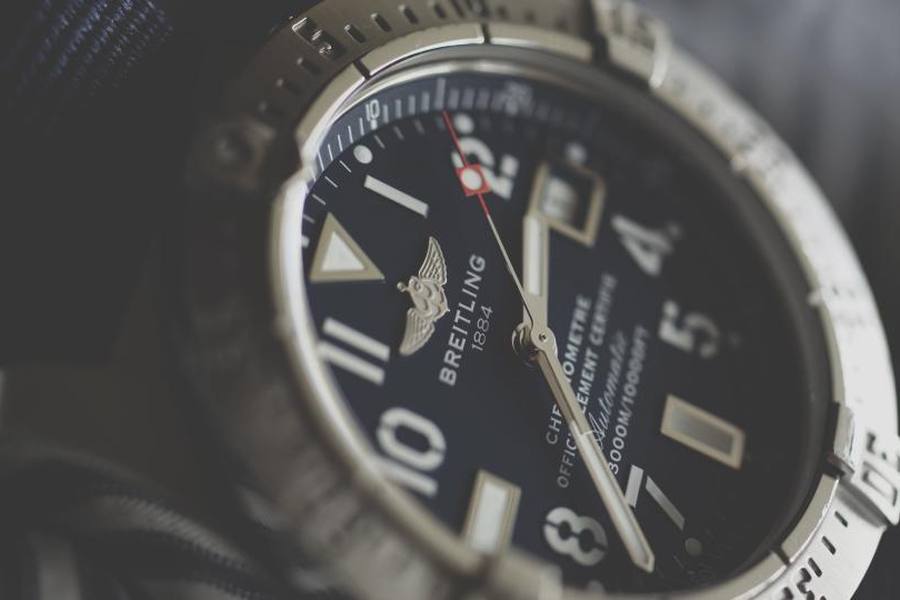
Representative image (stock photo); not the exact product.
The Specification Is The Argument
This offers a 300 metre rating, a ceramic bezel insert, sapphire crystal, and a Swiss automatic with an eighty hour reserve, at a price below the better-known Swiss divers.
Every one of those is a genuine specification rather than a marketing point. Ceramic does not fade or scratch the way aluminium inserts do, sapphire stays clear, and eighty hours covers a weekend.
It is the watch to look at for anyone comparing Swiss divers on merit rather than name recognition, because it delivers the specification list of watches costing considerably more.
Ceramic Bezel Matters More Than It Sounds
Bezel inserts on cheaper divers are aluminium, which fades in sunlight and scratches from ordinary contact. Over a few years an aluminium bezel looks visibly worn while the rest of the watch is fine.
Ceramic keeps its colour and resists scratching almost completely, so the bezel — the most exposed part of a dive watch — still looks new after years of wear.
Some people prefer the patina of a faded aluminium bezel, which is a legitimate aesthetic position. For a watch you want to look sharp indefinitely, ceramic is the correct choice.
Movement And Reserve
The Powermatic 80 based movement offers around eighty hours, hacking and hand-winding, and the same lower beat rate trade that produces the reserve.
Eighty hours is the practical threshold where a watch survives a weekend, and on a dive watch that might be a second or third watch rather than a daily one, that matters even more.
It is a Swiss movement serviceable through standard channels, with accuracy generally better than Japanese equivalents at similar prices.
Case, Bracelet And Practicalities
The case is around forty-three millimetres with a properly screw-down crown and a construction that feels like a tool watch, and the bracelet is solid with a diver's extension on many versions.
A diver's extension allows the bracelet to lengthen over a wetsuit, which is a functional feature most owners never use and which indicates the watch was designed as a diver rather than styled as one.
Lume is good, legibility is strong, and the overall impression is of a watch built to be used, which at this price is not universal among Swiss divers.
Who It Suits
This suits somebody comparing Swiss divers on specification rather than name, who wants ceramic, sapphire and an eighty hour reserve without paying for recognition.
It suits less well anyone who wants a specific well-known name, which is a real consideration in watches and not an irrational one.
It suits particularly well an actual diver or swimmer, since the 300 metre rating and the diver's extension indicate a watch designed for use rather than for display.
The Verdict
The specification-led choice among Swiss divers: 300 metres, ceramic bezel, sapphire, eighty hour reserve and a diver's extension, below the price of better-known equivalents.
It lacks name recognition, the lower beat rate gives a less smooth sweep, and 43 mm needs checking against your wrist.
If you are comparing on merit rather than name, this is the one that comes out ahead — the ceramic bezel alone will still look new when an aluminium one has faded.
At a glance
Pros
- 300 metre rating with screw-down crown
- Ceramic bezel resists fading and scratching
- Sapphire crystal and eighty hour Swiss movement
- Diver's extension indicates genuine design intent
Cons
- Less name recognition than obvious alternatives
- Lower beat rate gives a slightly less smooth sweep
- Around 43 mm; check against your wrist
- No faded-bezel patina for those who want it
Frequently asked questions
Why does a ceramic bezel matter?
Because aluminium inserts fade in sunlight and scratch from ordinary contact, so within a few years the most exposed part of the watch looks visibly worn while the rest is fine. Ceramic keeps its colour and resists scratching almost completely.
Is it as good as the better-known Swiss divers?
On specification it matches or beats many of them — 300 metres, ceramic, sapphire, eighty hours — at a lower price. What you give up is name recognition, which in watches is a real consideration rather than an irrational one.
What is a diver's extension for?
Lengthening the bracelet over a wetsuit. Most owners never use it, and its presence tells you the watch was designed as a diving tool rather than styled to look like one, which is a useful signal at this price.
Specifications
| Type | Swiss dive watch |
| Water resistance | 300 m, screw-down crown |
| Bezel | Ceramic insert, unidirectional |
| Crystal | Sapphire |
| Movement | Powermatic 80 based Swiss automatic |
| Power reserve | Around 80 hours |
| Bracelet | Solid, with diver's extension on many versions |
| Case size | Around 43 mm |
The bottom line
300 m, ceramic bezel, sapphire, eighty hour Swiss movement, below the obvious names. The specification-led choice if you compare on merit.
Check Price on Amazon